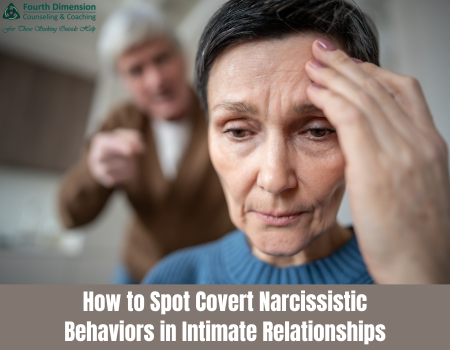
 When most people hear the term narcissist, they picture someone loud, arrogant, and openly self-absorbed, the kind who dominates conversations and seeks constant praise. But there’s another, far more insidious type: the covert narcissist boasting Covert Narcissistic Behaviors. Unlike their overt counterparts, covert narcissists operate quietly, subtly eroding the emotional stability of their partners through manipulation and guilt rather than grandiosity.
If you’ve ever felt like you’re constantly walking on eggshells in your relationship, doubting your worth, or questioning your perception of reality — you may be dealing with covert narcissism. Recognizing the covert narcissism signs early is crucial for your emotional safety and eventual recovery.
How to Spot Covert Narcissistic Behaviors in Intimate Relationships
1. Narcissistic Behavior: The Mask of Humility and Victimhood
Covert narcissists often disguise themselves as sensitive, humble, or misunderstood souls. They might seem empathetic or self-deprecating at first, drawing you in with their vulnerability. But over time, you’ll notice how their “humility” masks a deep need for validation.
They may frequently play the victim, blaming the world, their past, or even you for their unhappiness. You’ll often find yourself comforting them, even when you were the one hurt. Their victimhood becomes a tool for emotional control, keeping you trapped in cycles of guilt and reassurance.
What to do: Recognize that empathy can become a trap when used against you. Compassion doesn’t mean enabling manipulation. Set firm boundaries and remind yourself that someone’s suffering doesn’t justify emotional abuse.
2. Narcissistic Behavior: The Subtle Undermining
Unlike overt narcissists who might openly criticize, covert narcissists chip away at your confidence quietly. They might offer “helpful” feedback that leaves you feeling small — “I just don’t want you to embarrass yourself,” or “You’re lucky I’m patient with you.”
They excel at emotional gaslighting, denying what they said, twisting your words, or implying that you’re too sensitive. Over time, you start doubting your memory, your instincts, and even your sanity.
What to do: Keep a written record of events or conversations if you find yourself constantly second-guessing reality. This can help ground you in truth. Consider seeking emotional manipulation therapy with a licensed professional to rebuild your confidence and regain clarity.
3. Narcissistic Behavior: The Need for Control Disguised as Care
One of the most deceptive covert narcissism signs is how their control appears as concern. They may say, “I just want what’s best for you,” when questioning your choices, friendships, or independence. Slowly, your world begins to revolve around their needs and approval.
This control often comes with mood swings: Affection one day, and coldness the next. The inconsistency keeps you anxious, always striving to earn back their warmth.
What to do: Reclaim autonomy over your decisions. Start by making small independent choices again — even if it’s as simple as spending time alone or reconnecting with a friend. Healing often starts with rediscovering your own agency.
4. Narcissistic Behavior: Silent Punishments and Emotional Withdrawal
Covert narcissists rarely yell or explode; instead, they punish with silence. The “silent treatment” becomes a weapon to control you emotionally. They withdraw affection, ignore you, or give you the cold shoulder — forcing you to chase reconciliation.
This behavior conditions you to fear disconnection. You may begin apologizing for things you didn’t do, just to restore peace.
What to do: Resist the urge to chase their approval. A healthy relationship doesn’t weaponize silence or affection. During these moments, redirect your energy inward — journal, meditate, or reach out to a trusted friend. Emotional validation from within is the first step toward relationship healing.
5. Narcissistic Behavior: Envy Disguised as Support
Covert narcissists struggle deeply with envy, though they’ll rarely admit it. When you achieve something good; a promotion, recognition, or even happiness, they may respond with passive-aggressive comments or dampened enthusiasm. Their “support” often comes with subtle digs like, “Must be nice to have all that free time,” or “Don’t get too proud now.”
What to do: Recognize that their envy isn’t about you, rather, it’s a reflection of their own insecurity. You don’t need to shrink your light to protect someone else’s ego. Continue celebrating your wins unapologetically.
The Path to Relationship Healing
Recovering from a relationship with a covert narcissist is not just about leaving, but about relearning yourself. Emotional wounds run deep when love and manipulation intertwine. That’s why many survivors find emotional manipulation therapy and trauma-informed counseling essential.
Therapy can help you:
- Rebuild self-trust after prolonged gaslighting.
- Identify and enforce healthy boundaries.
- Heal attachment wounds that made the relationship feel “normal.”
- Reconnect with your authentic emotions and needs.
Healing doesn’t happen overnight, but it does happen. Each time you choose clarity over confusion, boundaries over guilt, and self-love over dependency, you reclaim a part of yourself.
Spotting covert narcissism signs is about protecting your peace. Whether you choose to stay and rebuild boundaries or walk away completely, the most important thing is to prioritize your emotional safety and healing.
True love doesn’t leave you anxious, confused, or small. It nurtures, uplifts, and allows both partners to grow — not one to control.
When you begin the journey of relationship healing and self-discovery, remember: you’re not broken. You’re simply learning to love in a healthier, freer way.