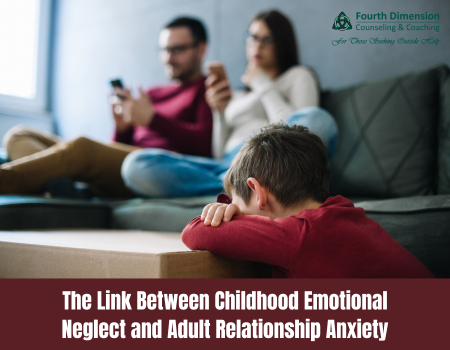
 It’s often said that the way we love as adults reflects the way we were loved as children. Yet, for many people, the problem isn’t about being unloved, it’s about growing up in an environment where emotions were ignored, dismissed, or minimized. This experience, known as childhood emotional neglect (CEN), leaves deep and invisible scars that often reveal themselves years later in adult relationships.
While physical neglect is easy to recognize, emotional neglect is more subtle, and that’s what makes it so damaging. It happens in homes that may look functional and even happy from the outside. Parents may provide food, education, and structure, but fail to validate or nurture their child’s inner world. Over time, the child learns to suppress feelings, believing their emotions are unimportant or burdensome.
As adults, those same individuals often struggle with relationship anxiety, trust issues, and emotional disconnection, even when they crave closeness. Understanding this connection is the first step toward healing.
What Emotional Neglect Looks Like in Childhood
Childhood emotional neglect doesn’t always stem from abuse or overt cruelty. More often, it comes from well-meaning parents who are emotionally unavailable, overwhelmed, or raised in environments where emotions were discouraged.
A child growing up in such a setting might hear things like:
- “Stop crying; you’re too sensitive.”
- “There’s nothing to be upset about.”
- “You should be grateful, not sad.”
While these statements might sound harmless, they send a powerful message: your feelings don’t matter. Over time, the child internalizes this belief, learning to disconnect from their emotions as a form of protection.
In adulthood, this emotional disconnection becomes a major barrier to intimacy. You can’t express what you were taught to ignore.
From Emotional Neglect to Attachment Trauma
Every child needs consistent emotional attunement; that is, to feel seen, heard, and understood. When this doesn’t happen, it creates what psychologists call attachment trauma. This type of trauma doesn’t come from dramatic events but from prolonged emotional absence.
According to attachment theory, our early experiences with caregivers shape our internal “attachment style,” which influences how we connect with others later in life. Children who grow up emotionally neglected often develop anxious or avoidant attachment styles.
- Anxious attachment: You crave closeness but constantly fear abandonment.
- Avoidant attachment: You fear dependence and may distance yourself emotionally to stay safe.
Both patterns can cause distress in relationships. The anxious partner worries about being rejected or not being enough, while the avoidant partner struggles to open up or trust others fully. In many cases, people oscillate between both, creating cycles of push and pull, and that is a hallmark of relationship anxiety.
How Emotional Neglect Shapes Adult Relationships
Adults who experienced emotional neglect as children often describe a sense of emptiness or disconnection they can’t quite explain. They may be high-functioning, independent, and even successful, but emotionally, they feel detached or misunderstood.
In relationships, this can manifest as:
- Overanalyzing a partner’s words or actions.
- Fear of rejection or abandonment.
- Difficulty expressing emotions or needs.
- Choosing emotionally unavailable partners.
- Feeling undeserving of love or affection.
Ironically, these behaviors often reinforce the very loneliness the person fears. The anxious partner might come across as clingy, pushing the other person away. The avoidant partner may seem distant, causing their partner to chase them, both outcomes rooted in early emotional deprivation.
Healing Through Emotional Awareness and Therapy
The good news is that emotional neglect is reversible. Healing begins with awareness, understanding that your emotional patterns are not your fault, but a product of early conditioning.
Emotional neglect therapy focuses on rebuilding emotional intelligence: learning to identify, name, and express feelings without shame. A therapist helps you recognize emotional triggers and unlearn the survival patterns that once kept you safe but now hold you back.
For those experiencing chronic relationship stress, relationship anxiety counseling can be life-changing. It provides tools to manage insecurity, build trust, and develop healthier communication. Over time, therapy helps you replace fear-driven responses with conscious, compassionate choices.
Healing also involves inner reparenting, which is the process of giving yourself the empathy, validation, and nurturing that were missing in childhood. This means learning to comfort yourself during moments of rejection, setting boundaries without guilt, and embracing vulnerability as a strength, not a threat.
Building Healthy Intimacy After Neglect
Recovery doesn’t mean becoming “perfectly secure.” It means becoming aware. When you can recognize your triggers and communicate your needs openly, intimacy becomes less about fear and more about connection.
You learn that love doesn’t have to feel like anxiety. That being seen isn’t dangerous, and that you are worthy of consistent emotional presence, both from yourself and others.
For many, the journey through attachment trauma leads to a deeper kind of love: one rooted not in dependence or avoidance, but in mutual understanding and safety.
Childhood emotional neglect doesn’t define your capacity to love or be loved. It simply explains why love sometimes feels harder than it should. When you seek support through emotional neglect therapy or relationship anxiety counseling, you begin to rewrite your emotional story, one that moves from survival to connection, from fear to trust.
Healing from emotional neglect is not about blaming the past; it’s about reclaiming the parts of yourself that were once ignored. When you do, relationships no longer feel like a battlefield, instead they become a place of peace.