
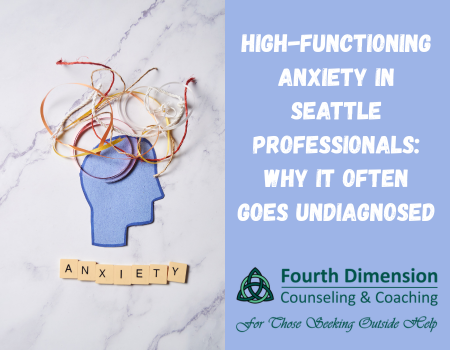
 Seattle is a beautiful place known for innovation, ambition, and a workforce that quietly carries a lot on its shoulders, from tech campuses to healthcare systems, from startups to established corporations, many professionals operate at a high level while managing constant pressure. In this environment, anxiety often hides in plain sight. High-functioning anxiety is common among Seattle professionals, yet it frequently goes undiagnosed because it does not look like what people expect anxiety to be.
This form of anxiety does not always involve panic attacks or visible distress. Instead, it blends seamlessly into productivity, responsibility, and success.
What masked anxiety looks like
High-functioning anxiety is often masked by competence, and people with it show up on time, meet deadlines, and perform well. They are reliable, organized, and outwardly calm. Internally, however, their minds rarely rest.
Masked anxiety shows up as overthinking, constant self-monitoring, and a persistent fear of falling behind. Many professionals feel an intense need to stay in control, double check their work, and anticipate every possible problem. They may replay conversations long after they end or worry excessively about small mistakes that others barely notice.
Because these behaviors are rewarded in professional environments, they rarely raise concern; being thorough is praised, being available at all hours is normalized, and being driven is seen as a strength. The probelm is that the anxiety underneath remains unseen, even by the person experiencing it.
Seattle’s productivity culture reinforces silence
Seattle’s work culture plays a major role in why high-functioning anxiety goes unnoticed. The city attracts ambitious and intelligent people who value performance and innovation, so long hours, mental endurance, and constant learning are often treated as the baseline rather than the exception.
In tech and knowledge-based industries especially, productivity is closely tied to identity. Many professionals measure their worth by output, impact, and progress. When anxiety fuels productivity, it becomes difficult to recognize it as a problem. If stress leads to promotions, praise, or financial stability, questioning it feels risky.
There is also a cultural tendency in Seattle toward emotional privacy. People often keep personal struggles contained, sharing selectively or not at all. Combined with remote work and digital communication, this makes it easier for anxiety to stay hidden behind screens and schedules.
Why high-functioning anxiety is rarely self-identified
One reason why this form of anxiety goes undiagnosed is that it does not match common mental health narratives. Many people believe anxiety must be disruptive, visible, or incapacitating to count, and so if someone is succeeding professionally, they assume they are coping well.
High-functioning anxiety often feels like personality rather than a mental health issue. People describe themselves as naturally driven, detail-oriented, or high standards oriented, and there is the tendency to believe that their constant tension is simply the cost of being responsible or successful.
Another barrier is comparison. When everyone around you appears equally busy and stressed, your own anxiety feels normal. In Seattle’s fast-paced professional circles, chronic stress can feel like a shared experience rather than a signal to slow down or seek support.
The hidden cost of constant functioning
Even when anxiety does not stop productivity, it takes a toll. High-functioning anxiety often leads to burnout, sleep problems, irritability, and difficulty being present outside of work. Relationships may suffer because the mind is always elsewhere, planning or worrying.
Physically, chronic anxiety can show up as headaches, muscle tension, digestive issues, or frequent illness, and emotionally, it can reduce joy, spontaneity, and creativity. Many professionals realize something is wrong only when they finally slow down and feel how exhausted they are, and because the anxiety has been productive for so long, letting go of it can feel scary. Some people worry that without their anxiety, they will lose their edge or motivation, and this fear keeps them stuck in a cycle of overperformance and internal strain.
Therapy entry points that feel accessible
For many Seattle professionals, the idea of therapy becomes appealing only when framed in practical terms. Therapy is often more approachable when it is seen as a tool for optimization rather than crisis management.
Common entry points include wanting better work-life boundaries, improved focus, or relief from constant mental noise. Some seek therapy after a job change, a promotion, or a period of burnout that exposes how unsustainable their coping patterns have become.
Short-term, goal-oriented therapy models often resonate with high-functioning individuals. These approaches focus on awareness, skill building, and nervous system regulation rather than labeling or pathologizing. Over time, many discover that therapy is not about reducing ambition but about creating a healthier relationship with it.
Making anxiety visible without stigma
High-functioning anxiety remains undiagnosed not because it is rare, but because it is rewarded. In Seattle’s professional culture, anxiety often hides behind achievement, making it easy to overlook and hard to name.
Recognizing it requires a shift in how success is defined. When professionals begin to see constant tension as a signal rather than a strength, they open the door to support.
Addressing high-functioning anxiety is not about doing less or caring less, it is about learning to function well without living in a constant state of internal pressure. For many Seattle professionals, that realization is the first step toward a more sustainable and fulfilling way of working and living.