
You told yourself you wouldn’t check your partner’s phone again.
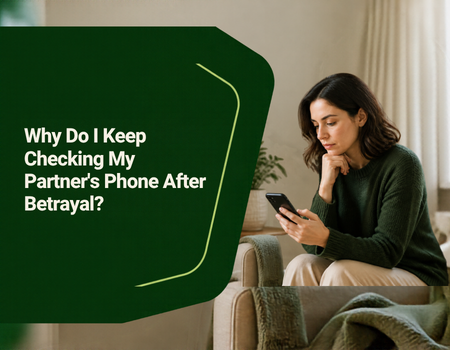
But your partner leaves their phone on the counter, and the urge returns. You wonder who they’re messaging, whether conversations have been deleted or whether something is happening that you don’t know about.
Even after looking through the phone and finding nothing concerning, the relief doesn’t last.
After infidelity or another serious betrayal, repeated checking can develop as an attempt to regain a sense of safety and predictability. Your trust has been damaged, and your mind is searching for information that might prevent another painful discovery.
That response is understandable. But constant monitoring can also become exhausting, particularly when checking provides only temporary reassurance.
Why Does Betrayal Make You Question Everything?
Discovering that a partner has been dishonest can change how you interpret everyday events.
Before the betrayal, a delayed text might have seemed unimportant.
Afterward, the same delay may trigger questions about secrecy, deception or another relationship.
Your mind may begin reviewing previous conversations and searching for details you missed.
This heightened alertness is often described as hypervigilance.
Hypervigilance can occur after distressing experiences, including relationship betrayal, although it doesn’t automatically mean someone has post-traumatic stress disorder.
Fourth Dimension Counseling & Coaching specializes in counseling and therapy for betrayed partners, including people affected by infidelity and problematic sexual behavior.
Why Does Checking Your Partner’s Phone Feel Necessary?
When trust has been broken, information can feel like protection.
You may believe that if you check carefully enough, you’ll discover any future dishonesty before it causes more harm.
Checking can temporarily reduce uncertainty.
But the relief often disappears because a phone inspection cannot establish what someone will do tomorrow.
This can create a repeating pattern:
- You notice something that triggers uncertainty.
- You feel anxious or suspicious.
- You check your partner’s phone or online activity.
- You experience temporary relief or discover something concerning.
- Uncertainty eventually returns.
The pattern may become increasingly difficult to interrupt, especially when the original betrayal involved hidden messages, dating apps or secret online accounts.
Does Checking Mean I’m Controlling?
Not necessarily.
The motivation behind checking matters, as does the behavior itself.
Someone who has experienced repeated dishonesty may seek information because their sense of trust has been seriously damaged.
At the same time, repeatedly accessing another person’s private accounts without permission can create additional relationship and privacy problems.
It’s important to distinguish between mutually agreed transparency and unauthorized monitoring.
Understanding why you’re checking doesn’t mean every method of checking is healthy or appropriate.
Is Phone Transparency Helpful After Infidelity?
For some couples, voluntarily agreed transparency can be one part of rebuilding trust.
That might involve discussing communication with outside parties, agreeing on boundaries around certain apps or establishing clear expectations about honesty.
However, transparency shouldn’t become a substitute for meaningful behavioral change.
Access to a phone cannot replace accountability, consistent honesty, respect for boundaries and a willingness to address the underlying betrayal.
Any transparency agreement should be voluntary, clearly defined and reviewed over time rather than imposed through threats or intimidation.
Why Do I Still Feel Suspicious When My Partner Is Doing Everything Right?
Trust doesn’t automatically return when dishonest behavior stops.
Your emotional response may continue long after the initial discovery, especially if the betrayal involved repeated deception or multiple disclosures.
You may intellectually recognize that your partner is behaving differently while still feeling anxious.
Those experiences can coexist.
Rebuilding trust usually involves more than a promise that the betrayal won’t happen again. It requires time, consistent behavior and opportunities to process what happened.
Importantly, healing doesn’t require you to remain in the relationship. Some people work toward reconciliation, while others decide that separation is healthier.
What Actually Helps Rebuild Trust?
There isn’t a single formula, but several factors are commonly important.
Honesty Without Repeated Discovery
Continually uncovering new information can undermine attempts to rebuild trust.
Accountability involves addressing relevant dishonesty rather than waiting for the betrayed partner to find evidence independently.
Consistent Behavior
Trust develops through repeated experiences of reliability.
Promises matter less when behavior repeatedly contradicts them.
Respect for Emotional Responses
A betrayed partner may experience anger, sadness, uncertainty or intrusive thoughts.
Those feelings shouldn’t be dismissed simply because the other partner wants the relationship to move forward.
Appropriate Boundaries
Couples may need to establish clear expectations around contact with other people, online behavior, honesty and communication.
Boundaries should reflect each person’s needs and choices rather than attempts to control through fear.
Professional Support When Needed
Individual counseling can help a betrayed partner process the experience and decide what they need moving forward.
Couples counseling may also be appropriate when both partners are willing to participate and the relationship is safe enough for joint work.
What If My Partner Says I Should Be Over It By Now?
There isn’t a universal deadline for recovering from betrayal.
Someone who caused harm may want reassurance that the relationship is improving. But pressuring the betrayed partner to stop asking questions or expressing feelings can interfere with recovery.
At the same time, neither partner benefits from an indefinite cycle of accusation and surveillance.
The challenge is developing a process that addresses legitimate concerns while reducing behaviors that keep both people trapped in constant conflict.
Can Betrayal Trauma Therapy Help With Hypervigilance?
Therapy can help people understand their emotional responses after betrayal and develop ways to manage distress without ignoring legitimate relationship concerns.
For some individuals, treatment may involve identifying triggers, developing grounding skills, processing grief and anger, and clarifying personal boundaries.
It may also involve deciding what evidence of accountability is necessary before considering reconciliation.
Fourth Dimension Counseling & Coaching provides specialized betrayal trauma and betrayed partner counseling, along with individual and couples therapy options.
Its approach recognizes that betrayed partners may need their own recovery process rather than being expected to focus exclusively on preserving the relationship.
How Do I Stop Checking Without Ignoring Red Flags?
The goal isn’t to convince yourself that everything is fine when genuine concerns remain.
Instead, begin separating observable facts from fears about what might happen.
Ask yourself:
- What specifically triggered my concern?
- Is there a current behavior that needs to be addressed?
- Am I seeking information or temporary reassurance?
- Have we agreed on appropriate transparency and boundaries?
- What would help me make a clear decision about this relationship?
When the urge to check appears, taking time to identify the trigger can help you respond more deliberately.
If the relationship includes ongoing deception, coercion or intimidation, the priority may be protecting your safety and independence rather than trying to reduce understandable suspicion.
What If the Betrayal Involved Pornography or Sexual Addiction?
For some couples, betrayal involves pornography use, secret sexual behavior, repeated infidelity or other actions that violated established relationship agreements.
These situations can involve complex questions about honesty, disclosure, compulsive behavior and relationship boundaries.
Not all pornography use represents an addiction, and not every case of infidelity is caused by compulsive sexual behavior.
When problematic sexual behavior is present, appropriate assessment and treatment can address the behavior while the betrayed partner receives support for their own experience.
Fourth Dimension offers specialized counseling for sex and pornography addiction, betrayed partners and relationship concerns.
Frequently Asked Questions About Checking a Partner’s Phone
Is it normal to want to check my partner’s phone after cheating?
It’s understandable to seek reassurance after discovering dishonesty. However, repeated monitoring may provide only temporary relief and can become emotionally exhausting.
Does checking my partner’s phone mean I haven’t forgiven them?
Not necessarily. Forgiveness, trust and emotional recovery are different processes. Someone may want to move forward while still experiencing uncertainty or fear.
Should couples share passwords after infidelity?
Some couples voluntarily agree to greater transparency, but password sharing isn’t a universal requirement for rebuilding trust. The agreement should respect privacy, consent and the needs of both partners.
Can a relationship recover after repeated cheating?
Some relationships recover after serious betrayal, while others don’t. The outcome depends on many factors, including accountability, safety, sustained behavioral change and each person’s willingness to continue the relationship.
Can therapy help me stop feeling constantly suspicious?
Therapy can help you understand triggers, manage distress, establish boundaries and evaluate what you need to feel emotionally safe. It doesn’t require you to ignore ongoing dishonesty.
Healing After Betrayal Is About More Than Checking for Evidence
After betrayal, the desire to know everything can become overwhelming.
But long-term emotional recovery involves more than access to messages, passwords or accounts.
It involves understanding what happened, recognizing your own needs, establishing boundaries and deciding what a trustworthy relationship would need to look like.
Fourth Dimension Counseling & Coaching specializes in betrayed partner and infidelity trauma counseling. The practice offers individual, couples and group counseling options, including secure online therapy in states where its clinicians are licensed.
If you’re struggling with hypervigilance, repeated checking or uncertainty after betrayal, contact Fourth Dimension Counseling & Coaching or call 425-652-1690 to discuss available counseling options.