
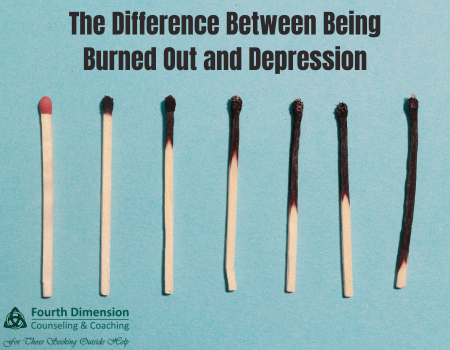
 Burnout and depression get conflated constantly, and the conflation matters because they respond to different things. Treating burnout like depression, or depression like burnout, produces months of effort aimed at the wrong target. The distinction isn’t academic. It’s the difference between a rest that resolves things and a rest that doesn’t, between a job change that helps and a job change that doesn’t follow you into the next role.
Both experiences are real. Both deserve attention. They’re not the same thing, and understanding the difference is the starting point for addressing whichever one is actually present.
What Burnout Looks Like
Burnout is specifically tied to sustained overextension in a particular context — usually work, sometimes caregiving, and sometimes a combination of roles that have collectively demanded more than the person has been able to sustain. The exhaustion that characterizes burnout is a depletion that has a source that’s identifiable, at least in retrospect. Too much for too long without adequate recovery.
The specific features of burnout that distinguish it from depression are its contextual nature and the way it responds to removal from the stressor. A person who is burned out at work typically experiences some relief on vacation, some improvement over a weekend, and some loosening of the flat, exhausted quality that defines their work days when they’re away from the environment producing the depletion. The relief isn’t complete, and it doesn’t last — returning to the same conditions returns the same experience — but it’s present in a way that points toward the context rather than toward a pervasive internal state.
Cynicism and detachment are features of burnout that aren’t primary features of depression. The burned-out professional who used to care deeply about their work and now finds it difficult to care at all, who’s become sardonic about things that once mattered, who goes through motions they can no longer connect to — this is burnout’s emotional signature. It’s not that nothing matters. It’s that this specific domain has been depleted to the point where caring requires more than is available.
What Depression Looks Like
Depression is less context-dependent. It doesn’t stay at work when you leave work. It doesn’t improve meaningfully when the stressor is removed because the stressor isn’t the source — the internal state is the source, and it follows the person across contexts rather than being contained within one.
The pervasiveness is the clinical distinction that matters most. A depressed person doesn’t feel better on vacation in a way that a burned-out person might. The activities that used to produce enjoyment don’t produce it, not because of exhaustion or depletion, but because the capacity for pleasure is diminished in a way that rest doesn’t restore. Sleep that’s supposed to be restorative isn’t. Weekends that are supposed to provide relief from work don’t provide relief because the experience isn’t located at work.
Depression also carries a specific quality of hopelessness that burnout doesn’t necessarily produce. A burned-out person can usually imagine feeling better if the conditions change. They’re exhausted and depleted and done, but they can conceive of a version of things where the load is lighter, and the experience is different. A depressed person often can’t access that vision. The hopelessness is part of the experience rather than a rational assessment of the situation.
Where They Overlap and Why It Matters
Burnout and depression aren’t mutually exclusive, and sustained burnout can produce depression in people who didn’t have it before. The depletion, the chronic stress, the sustained disconnection from meaning and pleasure — these are conditions that over time can produce the neurological and psychological changes that constitute clinical depression rather than situational exhaustion. A person can start with burnout and develop depression. They can have both simultaneously. The presentation gets complicated, and the intervention needs to address what’s actually present rather than what was present at the beginning.
This is where the self-diagnosis problem creates real consequences. Someone who correctly identifies burnout and takes a leave of absence, changes jobs, or reduces workload may find partial relief if the burnout was driving most of the experience. If depression develops alongside the burnout and doesn’t respond to the workload change, the person who was expecting full recovery from the structural change has a different and more confusing experience. They did the right thing, and it didn’t fully work, which is disorienting in a way that can make the depression harder to address.
What Therapy Does With Each
Burnout counseling in Seattle and Bellevue typically focuses on the conditions that produced the depletion — the values, the boundaries, and the patterns of overextension that made sustained burnout possible — alongside recovery of the capacity and engagement that the burnout depleted. The work is partly about the present exhaustion and partly about understanding what created the conditions for it.
Depression treatment involves a different set of approaches that address the neurological, psychological, and situational dimensions of the experience, depending on what assessment reveals about the specific presentation. The treatment for depression that has a significant biological component is different from the treatment for situational depression that primarily responds to circumstances, and both are different from the treatment for depression that developed out of sustained burnout.
Getting the assessment right before committing to an approach is what produces outcomes rather than well-intentioned interventions that don’t match what’s actually happening. In Seattle and Bellevue’s professional culture, where both burnout and depression are prevalent and often unaddressed, that assessment is the starting point that everything else depends on.
The American Psychological Association’s resources on burnout and depression cover the clinical distinctions between the two experiences, what the research shows about how sustained burnout can produce depression, and what evidence-based treatment approaches address each — authoritative context that supports the article’s core argument about why getting the distinction right matters for getting the intervention right.